Sponsored
Techradar |

- Ofcom: '4G mobile might mess up your digital TV'
- Games creators in no rush for PS4 or Xbox 720
- First hands-on with Sony's NGP
- YouTube, Spotify to get Parental Advisory labels
- Updated: Best Android phone - which should you buy?
- Orange offers up iPad 2 and iPhone 4 bundle
- Elop denies Microsoft-Nokia buyout rumours
- Opinion: Windows 8 could make you rethink buying iPad 3
- Sony PlayStation Vita: new NGP name outed by Sony
- HP open to licensing webOS to other manufacturers
- Buying Guide: Best compact system camera 2011: 10 reviewed and rated
- Updated: Windows 8: everything you need to know
- Google +1 button launches across the web
- PlayStation Store back online after six-week hiatus
- Attempted Gmail hack came from China, says Google
- Updated: iOS 5 rumours: what you need to know
- Updated: iCloud: 10 things we want to see
- Updated: iPhone 5 rumours: what you need to know
- Hands on: MSI WindPad review
- Video: Windows 8 for tablets and touchscreens revealed
- iCloud to be free to Mac OS X Lion users?
- Twitter launches own photo-sharing service
- Mitsubishi unveils six-metre OLED globe
- Asus unveils world's first glasses-free 3D laptop
- Microsoft shows Forza 4 head-tracking demo
| Ofcom: '4G mobile might mess up your digital TV' Posted: 02 Jun 2011 02:54 PM PDT We all know that annoying sound that is caused by our mobile signal clashing with the FM radio in the car, but it looks like high speed mobile services may also cock up our digital TV reception more in the future. According to regulator Ofcom, mobile signals may well make digital TV almost unwatchable for lots of Brits in the future. Telly versus mobile Ofcom is now kicking off some research into how this might be prevented from happening and ruining our enjoyment of such modern TV classics as "Come Dine With Me" and "Britain's Got Talent" in the future. To be fair, Ofcom's latest research does suggest that the impact of the fourth-generation (4G) mobile signal on our goggleboxes will only affect around three per cent of TV-watching Brits. Still, even if that is the case, that's still over three-quarters of a million annoyed TV viewers and BBC license-payers demanding to know why their telly is on the blink. Plus, if there is a problem with mobile signals affecting a few hundred thousand Brits' access to Eastenders, then we surely expect to read a heated Daily Mail or Sun headline about the fact at some point in the future, hence Ofcom's concern. The reason why this might happen is that the spectrum that is currently reserved for delivering a faster 4G mobile signal to Brits sits worryingly close to that which is used to broadcast terrestrial digital telly. The auction for the 800Mhz band takes place next year, with 4G mobile services also set to arrive in the UK soon. Yet while we all want faster downloading times and streaming services on our mobiles and tablets, what we don't want is that annoying interference noise spoiling our TV viewing, as Ofcom rightfully points out in its latest report. Ofcom's latest consultation exercise to look into the possible problems that might arise from this 4G interference issue runs until 11 August this year. Obviously, most of us will not own or use 4G-capable smartphones until long after that date, so we will not actually know whether or not they really do spoil our telly-vision distractions and delights until we have them sat in our pockets or handbags or man-bags. 
| ||
| Games creators in no rush for PS4 or Xbox 720 Posted: 02 Jun 2011 01:14 PM PDT The run-up to E3 each year is traditionally marked by a heady mix of a lot of marketing hype (from PRs and publishers) mixed in with a spectacular amount of rumour (from 'the internet') and a healthy dash of "let's-just-wait-and-see-shall-we?" cynicism (from seasoned games journalists). The biggest pre-E3 hype this year is focused squarely on the final reveal of a new Nintendo home console (codename: Project Cafe) and a new handheld console from Sony (codename: Next Generation Portable). Yet while there is clearly a lot of excitement amongst gamers and games developers around the fact that Nintendo is finally poised to reveal its successor to the Wii, it seems that games publishers are in no rush to push Sony or Microsoft for the 'next gen' PlayStation or Xbox . Plenty of potential with PS3 and 360 Strauss Zelnich, the influential CEO of Take-Two, recently claimed that there is still "plenty of room to push the limits of creativity" on current console tech. Zelnick told MCV this week: "If you exclude Wii - which one could argue is at least partially a different market than Xbox 360 and PS3 - the market is not in a depression. "Moreover, we've seen and will continue to see huge growth in new forms of interactive entertainment. If you give consumers what they want - whether that's a social game on Facebook or a triple-A, multi-hour experience on a console - they'll come out for it. "As for the technology itself," the Take Two CEO added, "we still have plenty of room to push the limits of creativity in the current console generation." We expect to hear lots more on Nintendo's Wii 2/Project Café and on Microsoft and Sony's own plans for the future of gaming tech from E3 in LA next week. Microsoft could well still amaze, shock and awe all of us with a new Xbox hardware announcement at E3 2011, but all signs to date are pointing towards a heavy focus on the latest Kinect experiences being the key messages coming out of Microsoft's E3 2011 conference next Monday. 
| ||
| First hands-on with Sony's NGP Posted: 02 Jun 2011 11:50 AM PDT Clearly there are going to be two big stories from E3 2011 – Nintendo's successor to the Wii (code-name: Project Café) and Sony's successor to the PlayStation Portable (code-name: Next Generation Portable). And - whatever the final pricing, product naming, software partners, and first-party and third-party games that are currently in development - Sony is sure to reveal its detailed plans and hopes for the new handheld in Los Angeles next week. On Monday 6 June at around 1am British Summer Time, to be fairly exact. If you happen to be up late and starting at the internet wanting to be the first to know about the future of the PlayStation brand... PSP2 could be huge! For now, the UK's Official PlayStation Magazine has already managed to get some hands-on time with Sony's new NGP, with OPM's Leon Hurley telling our colleagues over at CVG that "PSP2 could be huge." Hurley adds that the NGP's build quality is robust and "far more like a must-have lust-gadget than a toy". "Think 'small tablet PC' rather than 'upgraded PSP'," says the Official PlayStation Magazine man. "The buttons are reassuringly firm and far more solid than the rattly ones on previous models. The two analogue sticks feel good and are well spaced - although they are small. "The touchscreen is particularly impressive. Responsive and quick it transforms games such Hustle Kings from an alright snooker game to a moreish time-sink as you aim and shoot with finger-taps and swipes." Does Sony have a fighting chance at E3? All encouraging-sounding stuff, for sure, and it sounds like Sony may well have a fighting chance to impress the crowds of cynical games hacks and industry punters at E3 2011 this month. The OPM first-look goes on to describe NGP's motion control functionality as very reactive, claiming that it is a device that is "leaps and bounds ahead of other handhelds, combining the best of other platforms with near-PS3 visuals." Sony has already released a welter of pre-E3 info and assets on its major NGP releases such as WipEout 2048, Super Stardust Delta and the new Uncharted: Golden Abyss. All of which you can see more of over at CVG via the following links: · Hustle Kings, Little Deviants and more 
| ||
| YouTube, Spotify to get Parental Advisory labels Posted: 02 Jun 2011 09:17 AM PDT It's like the '90s all over again, as the familiar Parental Advisory label is set to be introduced to digital music and video services like Spotify and YouTube. It's only taken music industry body BPI the best part of a decade to cotton on to the fact that people use the internet to listen to music and watch movies, with the organisation set to "update our scheme for the digital age". The parental advisory label was first introduced to CD covers in 1995 to warn parents that the latest pop CDs their kids were into contained explicit material, including swearing, violent turns of phrase and references to sex - oh my! Geoff Taylor, chief executive of the BPI, said, "We think it is important for parents to get the same standards of guidance and information online as they get when buying CDs or DVDs on the high street. "We are updating our Parental Advisory Scheme for the digital age to ensure that explicit songs and videos are clearly labelled, giving parents the ability to identify material that may not be appropriate for their children." YouTube The move comes just as YouTube is set to invest in European video content with an initiative called NextUp. The Google-owned video site will award €20,000 funding to 25 European YouTubers with Partner status, as well as access to a four-day training event to help them create high quality, monetisable content. 
| ||
| Updated: Best Android phone - which should you buy? Posted: 02 Jun 2011 08:55 AM PDT Our verdict on the best Android phones - constantly updated There's one key way in which Android is massively different from its Apple-branded smartphone competition - the number of phones out there running Google's hot mobile OS. Samsung makes loads of them. Sony Ericsson makes a few. Then you've got Android-powered phones from Acer, LG, Huawei and many others, while HTC releases more in a month than all the rest added together manage in a year. The many variations in screen size, processor power, software features and design makes finding the best Android phone for you extremely tough. Do you physically and emotionally need a QWERTY keyboard? Are you the sort of oddball who prefers the rough pressing needed to make resistive touchscreens work? Do you actually like Orange widgets? To help find the best Android phone for you, we've rounded up the ten best Android handsets out there today, rating the phones on hardware performance, OS upgrade potential and, of course, how shiny and nice they are to have and boast about to work colleagues. So here they are - the ten best Android phones money can buy today. For many, many different reasons. 10. Orange San Francisco
This one defies all logic. You can currently pick up the Orange San Francisco for £79 on a SIM-free basis, which means it costs around one quarter the price of some of today's top-spec Android phones. But what you get here is no cost-cutting budget phone. The San Fran has a high-res 3.5" capacitive touchscreen, features Android 2.1, does a relatively good job of copying the high-end sleek designs of HTC and quite simply works way, way better than anything else at this entry level price point. Quick verdict: Get one as a spare, or just to use at home on Wi-Fi. A stunning amount of kit for an impulse-level purchase price. Sadly it looks like this won't receive an official update to 2.2 or 2.3 over here, which is rather a shame. 9. Motorola Atrix
Another of 2011's dual-core phones. A huge 1930mAh battery makes this a bulkier handset than the likes of the Galaxy S II or Xperia Arc, but then again it's nice to have the reassurance of extra longevity. Motorola's Motoblur user interface won't be to everyone taste, visually speaking, but if you can live with the odd colour choices the numerous widgets offer good functionality - and many are resizable. Elsewhere you get a snappy 5 MP camera that produces acceptable results and records 720p video, a front-facing camera for video chat, fingerprint recognition and DLNA support for streaming media. Motorola's crazy "Lapdock" accessory turns the Atrix into something resembling a netbook, but Android isn't ideal for working with and editing documents, so it's not a killer feature. Weird laptop aspirations aside, Atrix is a comprehensive and versatile device. Quick verdict: Big and powerful, the Atrix is fast to use with a very sharp 4" screen. Arriving with Android 2.2 onboard is a bit of a faux pas as far as enthusiasts are concerned, though. 8. Samsung Galaxy S
A bit like owning a fancy imported sports car, this. The screen on the Galaxy S is among the finest out there today, high-res and dazzlingly sharp and bright. The problems come from Samsung's fiddlings with Android itself. While many of the TouchWiz user interface tweaks on the Galaxy S are welcome, they come at a price - the phone can be a little glitchy in operation, with quite a few annoying bugs and mini lock-ups. Happily, Samsug is in the process of rolling out Android 2.3 to existing Galaxy S users, making it a phone that's still relevant and worth investing in today. Quick verdict A lot of phone for the money, but the lack of camera flash, a few OS glitches and Samsung's notoriously relaxed attitude to pushing out software updates just stop this from being the perfect handset. 7. HTC Desire
The HTC Desire has been on sale for over a year now, and remains one of the most impressive and technically adept phones on the market. This is for two reasons - HTC released a superb piece of hardware that obliterated the competition at the time, and has also managed to get Android 2.2 onto nearly every version of the phone out there - plus an Android 2.3 update will be here by the summer, too. While users of other, newer phones fuss about with internet petitions in order to get their OSs upgraded, the older Desire remains cutting-edge. A great screen, flawless in operation and powerful enough to stay relevant until the end of even the longest mobile phone contract. Quick verdict: The Desire HD may offer a bigger screen and the Desire Z a physical keyboard, but the standard old Desire is still a stunning performer today. You won't be ashamed to own one of these at the end of your next 24 month contract. 6. Google Nexus S
The first Android 2.3 phone is also one of the first with NFC capabilities and a curved Super AMOLED screen from Samsung. The build quality might feel a little suspect at first, but is robust enough and sits in the hand well, and that screen is just superb for the internet and media. Quick verdict A 'no frills' handset that delivers on the specs - an affordable and practical phone for the developer and 'Pure Google' lover alike. 5. HTC Incredible S
Yet another solid 2011 Android phone from HTC. The Incredible S comes with a 4" Super LCD screen, making it resemble the Desire S' larger brother. As well as the screen size boost there's a more impressive camera, with the 8 MP sensor and LED flash doing a good job of improving HTC's rather poor reputation in the camera area. You also get a front-facing 1.3 MP second camera for the novelty that is video chat, plus a larger-than-usual 1450mAh battery keeps it lasting longer than 2010's HTC Desire HD, too. Quick verdict: Feels like all the other HTC phones – rock solid, smooth in operation and with a better camera than HTC usually manages. 4. HTC Desire S
This time last year the HTC Desire was the cutting-edge "superphone" of choice, now its enhanced sequel is an affordable mid-range option. That's how fast things move in the Android world. But don't dismiss the Desire S because of its workmanlike approach. What you get here is a solid phone with a great 3.7" screen, powered by Android 2.3 and HTC's updated Sense 2.1 user interface. The result is a very slick and smooth experience. The camera is sadly a weak point, though, offering the same blotchy 5 MP output as the original Desire. But apart from that, everything here's a little better than in last year's Desire. Which makes this a fantastic smartphone and a great entry to Android. Quick verdict: A superb update of the HTC Desire. Slightly smaller and a little faster, it's a perfect gradual evolution of 2010's smash. Available on some very cheap contracts, too. 3. Sony Ericsson Xperia Arc
Sony Ericsson's glamorous take on Android is an absolute pleasure to use, with its curved body feeling great in the hand and the 2.3 version of OS running smoothly on the phone's 1GHz processor. It's not dual-core, but it all moves very well indeed, with Sony Ericsson's user interface additions giving the Arc a stylish feel in use, too. The 4.2" BRAVIA Engine "Reality Display" is bright and colourful, with text sharp and well defined thanks to the high 854x480 resolution. The 8 MP camera produces great stills, with 720p video looking good despite the occasional glitch when recording. The Arc is simply a lovely, well designed thing to have and enjoy, that shows both Android and Sony Ericsson's phone-making skills in a great light. Quick verdict: Unbelievably thin and stylish, with internal bits that keep everything running fast and reliably. Good camera with HD video - it's a fantastic package. 2. HTC Sensation
The HTC Sensation is the Taiwanese brand's first attempt at a dual-core device and it's been a pretty big success so far. With a 4.3-inch qHD screen and the latest version of Sense coming on board makes it a really zippy and clear experience, and the addition of HTC Watch brings movie streaming and purchase to your handset. It's a well-built and solid device, and the 8MP camera can record in sparkling 1080p too - it might not be the top Android handset, but it's very, very close. Quick verdict We think the Samsung Galaxy S2 is a slightly better proposition overall, thanks to better screen technology and a slimmer chassis. But for the HTC fans out there, the Sensation is definitely the new alpha handset on the block. 1. Samsung Galaxy S2
You won't believe how thin and light it is. Then you won't believe how fast it is. The Galaxy S II offers a genuinely exciting experience, managing to eclipse all other Android phones in every field. Apps install ridiculously quickly, while browsing web pages is so fast it's hard to believe you're looking at a telephone screen. The large display is robust and, despite the slim and lightweight case, build quality manages to impress. You get the latest Android 2.3.3 onboard, while many of Samsung's Touchwiz widgets are resizable, making it a phone that's fun to customise and spend time playing with. This is Android made fast and thrilling. Quick verdict: The first of 2011's dual-core Android phones to offer an experience that feels significantly ahead of the competition. Incredibly fast in all areas, with a super screen and very useful camera - it's Android taken to the next level. 
| ||
| Orange offers up iPad 2 and iPhone 4 bundle Posted: 02 Jun 2011 08:44 AM PDT Orange is now offering an iPhone 4 and iPad 2 bundle, so you can get both devices on one price plan. The bundle is available now from Orange shops and it consists of a 3G iPad 2 and an iPhone 4 for the combined price of £65 per month. There is a caveat to this – you are limited to 2GB of data, which we think is more than a little low. It would have been great if this number was more like 5GB. Alongside this data allowance you also get 600 minutes of calls and unlimited texts. You will have to pay up front for both devices, with pricing starting from £99. While it is cheaper getting these devices in this bundle, you are still looking to pay around £1,900 (over the course of 24 months) for the privilege of owning an iPhone 4 and an iPad 2. SIM-ply the best Orange has gone a little tariff crazy and is also offering two new BlackBerry price plans called 'Orange 10' and 'Orange 15'. Essentially, customers who take out an Orange 10 price plan will receive a BlackBerry 8520, as well as 50 minutes and 50 texts - all for £10 per month If you take out the Orange 15 SIM only package, then you will receive 100 minutes, 500 texts, a 100MB data allowance and email. And you will get this for £15 a month. The Orange 15 plan can be used with a range of BlackBerry handsets available to purchase separately including the 9300, 9105, 9780 and 9800. 
| ||
| Elop denies Microsoft-Nokia buyout rumours Posted: 02 Jun 2011 06:04 AM PDT Nokia CEO Stephen Elop has spoken out about the rumours that Microsoft made the company an offer of $19 billion for its mobile phone business, describing the rumours as "completely baseless". Speaking at the D9 event hosted by All Things Digital, Elop told delegates, "There's absolutely no discussion. The rumours are baseless. It is as clear as that." And why? Because selling feature phones "does not align with Microsoft's business" – a fair point given the colossal failure of the Kin. The truth is out there But whether or not we choose to believe Elop is another matter; after all, it wouldn't be the first time that a tech CEO has played fast and loose with the truth about secret business plans. The rumours he's referring to have been stirred up by Eldar Murtazin, a blogger with an uncanny knack for rooting out Nokia rumours that tend to come true. He claimed that Microsoft had offered Nokia $19 billion for its mobile phone arm last week, although he offered no evidence to back it up. 
| ||
| Opinion: Windows 8 could make you rethink buying iPad 3 Posted: 02 Jun 2011 06:00 AM PDT Let's make something clear. I love iOS. I use it every day. But now more details on Windows 8 have emerged, Microsoft's new OS could pose a very real challenge to Apple's tablet supremacy as well as the exponential growth of Android. Let me explain. Despite slow sales, Windows Phone is a surprisingly good phone OS. If you're guffawing at that last sentence, we reckon you probably haven't used it. But Microsoft isn't just going to stick a variant of Windows Phone onto tablets, but onto every new PC as well, as part of Windows 8. And Microsoft's new OS has a potentially game-changing trick up its sleeve. Microsoft isn't redesigning the Windows that we all know. Indeed, Windows 8 will have a desktop that's actually very similar to Windows 7. But it will be overlaid by the Windows Phone-style interface. Two operating systems in one, you might say. And that's actually going to propel Windows 8 devices past their competitors in terms of do-it-all devices.
SEAMLESS: Windows 8 tablets will enable you to move directly between a Windows Phone-style interface and a standard Windows desktop The iPad is a terrific device and is supreme in terms of apps, support and games. But it's not a workhorse. I know, because I use one every day. Yes, you can write stuff in Pages, do presentations and get your work email. But it's just not as effective as a Mac or PC at doing serious work. If you disagree with this statement, we simply point you to the fact you can't attach an image in the Mail app or that sharing files between apps is still very limited. While Apple is introducing iOS-like interface tweaks in Mac OS X 10.7 Lion (and wants to preserve Mac sales), there's still a massive opening here. Something with the flexibility of Windows but the simplicity of iOS. And yep, Windows 8 has both. A tablet for all purposes Suddenly, you could have one tablet that could do everything. You could use the Windows Phone-style touch interface on the sofa or the train, arrive at the office and plug it into a screen, keyboard and mouse. And instantly, there you are in the traditional Windows desktop with access to all the same stuff. Now that's something we'd like to have. It's actually the second masterstroke of Windows 8. The first was made at CES, with the announcement it would move beyond the traditional AMD and Intel platforms and run on ARM-based silicon. That means the first Windows 8 tablets could be packing the quad-core chips that will be coming from various manufacturers like Qualcomm and Nvidia later this year. It's also meant that Intel and AMD have had to seriously up their game in terms of mobile architectures. Longer term, that will mean more compute power at the same time as giving longer battery life. And, of course, being supported by such a massive spread of manufacturers is great news for Microsoft. Finally, Windows can emerge from the shadow of the PC as we know it. ----------------------------------------------------------------------------------------------------- 
| ||
| Sony PlayStation Vita: new NGP name outed by Sony Posted: 02 Jun 2011 05:40 AM PDT It looks like we should all get used to calling the PSP2 the Sony Vita, as it is set to be the new name for the NGP. This is according to a commenter on Neogaf.com, who took a look round at the source code of Sony's E3 2011 teaser page and found the name embedded in the code. Sony has kept schtum about the matter – although the name has now mysteriously disappeared from the code – but it seems likely that the rumours earlier this week around the name Sony PlayStation Vita will turn out to be correct. Lovely Vita, Sony made The name PlayStation Vita makes a modicum of sense; Vita is the other name for Beta in the Greek alphabet, which is the second letter. It is also Latin for life and gaming is life, right? Okay, we are clutching at straws but it isn't the worst console name we've ever heard – Nintendo Wii, anyone? – not by a long stretch. Sony is to unveil more details about the PlayStation Vita / NGP at this year's E3 which his all set to kick off 6 June. 
| ||
| HP open to licensing webOS to other manufacturers Posted: 02 Jun 2011 05:26 AM PDT HP's CEO Leo Apotheker has said that he is open to allowing other manufacturers to build handsets that run webOS. Speaking at the D9 conference, Apotheker talked about his belief in the Palm-made operating system, saying that it should be set free. "I happen to believe that WebOS is a uniquely outstanding operating system. It's not correct to believe that it should only be on HP devices," he said. When you love something, set it free Apotheker went on to respond to a question about whether HP would license the OS to other companies, specifically HTC, he answered, "It is certainly something we would entertain." Meanwhile at Qualcomm's Uplinq conference, HP's Jon Rubinstein told delegates that HP would partner with "one or two special companies" on webOS, but went on to add that HP wouldn't work with manufacturers already offering other mobile operating systems. Apotheker as CEO certainly outranks Rubinstein as senior vice president and general manager, but since Rubinestein was CEO of Palm before HP acquired it last year, he may have more say over webOS than your average VP. Let the will-they-won't-they webOS licensing speculation begin. 
| ||
| Buying Guide: Best compact system camera 2011: 10 reviewed and rated Posted: 02 Jun 2011 05:03 AM PDT There can be no doubt: it's an exciting time to be drooling over camera gear. Photography buffs - whether they're pros or serious amateurs - are falling over themselves to embrace a new but rapidly maturing breed of new equipment: compact system cameras. The internet is so thrown for a loop over this gadget that photographers can't even quite agree on what to call this new offspring of the ever-popular DSLR cameras and the cheeky, high-end breed of clever compacts. Whether you call them MILC (Mirrorless Interchangeable Lens Camera), EVIL (Electronic Viewfinder, Interchangeable lens) or just 'fancy bridge cameras', you could do a lot worse than sticking one of these on your shopping list. It just might completely change the way you take pictures. We've had a look at what's out there and compiled our list of the ten best compact system cameras available today. The cameras below are ranked in no particular order. Prices are the best street price, body only (unless noted), as of the time of writing. 1. Panasonic Lumix DMC-GF2 Price: Around £450 Specs: 12.1MP, Micro Four-Thirds format, Full HD video mode
The Lumix GF2 is an astonishing little beast. Even though it's Panasonic's smallest and lightest interchangeable lens camera to date, the company certainly hasn't skimped on features: the camera packs a 3-inch touch screen and a built-in flash. The Panasonic GF2 has a video mode, shooting full 1080i (or 720p, if that's your thing), and a solid optical image stabilisation helps you get the crispest stills and video. Best of all, the Panasonic GF2 is compatible with all Micro Four Thirds lenses, so you've got plenty of choice of glass to choose from, too. Read our full Panasonic GF2 review 2. Panasonic Lumix DMC-G3 Price: £549 Specs: 16MP, Built-in EVF, HD video mode
The Panasonic G2 was one of the first new-breed cameras that felt 'right', with its 3in swiveled touch-screen display, Micro Four Thirds compatibility and a built in 60fps electronic viewfinder. The G2's successor, the recently announced Panasonic G3, takes this foundation and adds even more improvements, making it a serious competitor to DSLR cameras. Like the G2, the Panasonic G3 offers a built-in electronic EVF and an articulated LCD screen, but it adds touchscreen functionality, 20fps continuous shooting at 4MP, subject-tracking AF, improved AF speeds and a new 16.7MP sensor. Panasonic appears to have a real winner on its hands with the Lumix G3. The camera combines the best elements of the G2 and Lumix GF2 and produces high-quality images. Read our full Panasonic G3 review 3. Panasonic Lumix DMC-GH2 Price: £649 Specs: 18MP, Full HD 1080p video mode
You may not appreciate it before you hold one, as at first glance the Panasonic GH2 looks a lot like an SLR. Hold one if you get the chance, and you'll realise how impossibly small it is. The Panasonic GH2 has an 18-megapixel sensor which it uses to capture gorgeous 16MP images. The 'missing pixels' are used to enable the user to pick their favourite aspect ratio for their images. Between its incredible ISO range (160-12,800), a touchscreen LCD display and its built-in stereo microphone, the Lumix GH2 is definitely worth a closer look if you're planning to drop some serious cash, especially if you're into video as well as stills photography. Read our full Panasonic GH2 review 4. Panasonic Lumix DMC-G10 Price: £179 Specs: 12.1MP, video mode
The Panasonic G10 is a cheaper, slightly stripped down version of the G2. Sadly, the Panasonic G10 is being discontinued and won't be around forever, but for now you can still get a great compact system camera at an affordable price. However, by paying less for the Panasonic G10 you're losing the G2's rather fancy swivel touchscreen, replacing it instead with a fixed, non-touchscreen version. The electronic viewfinder in the Lumix G10 is also not as good as the one found in the the Panasonic G2. Don't get us wrong, the Pansonic G10 is an impressive image-making machine, but the fact remains that a lot of online retailers have slashed the price of the G2 model in the wake of the Panasonic G3 release (the G2 isn't being discontinued; rather, it is moving down in the Panasonic line-up to replace the Lumix G10). If the G10 seems like a good choice for you, then you could save a bit of extra cash and pick up a G2 instead. On the other hand, with the Panasonic G10 now on its way out, prices may fall even further making this camera a real bargain. Read our full Panasonic G10 review 5. Olympus PEN EP-2 Price: £600 Specs: 12.3MP, video mode
The Olympus PEN EP-2 is a great camera. It's quite heavy compared to some of its stablemates in the compact system camera stable, but it feels very much like a solid rangefinder camera of years gone by. Use the 17mm 'pancake' lens, and you can't help but feel like a jaded, 1940s wartime photographer - with image quality to match its fantastic looks. One tip though: the PEN EP-2 is such a minor update over the wildly popular Olympus PEN EP-1 that if you aren't fussed about the optional electronic viewfinders and can find a PEN EP-1 at a good price, you may as well go for the Olympus PEN EP-1 instead. Read our full Olympus PEN EP-2 review 6. Olympus PEN E-PL2 Price: Around £450 (plus 14-42mm lens) Specs: 12MP, built-in flash, 720p video mode
With the popularity of the EP-series among professionals and serious amateurs, Olympus decided to widen the net it was casting, to try and reel in some newbies as well. The E-PL1 was the answer, and packs most of the EP-2's functionality into a more compact-camera-like shell. The PEN E-PL2 loses the control dial built into the EP-2, but gains a built-in flash. The latter doesn't sound like a big deal, but in low light, we have missed the option to use a flash surprisingly often. Read our full Olympus PEN E-PL2 review 7. Sony NEX-5 Price: £440 (plus 16mm lens) Specs: 14.2MP, APS-C type HD CMOS sensor, 1080i HD video mode
Sony is a relative late-comer to the compact system camera scene, but when it launched its NEX-3 and NEX-5 cameras, they made quite an impact. Compared to the other MILC/EVIL cameras, the Sony NEX camera bodies are less DSLR-like, instead building on Sony's compact camera pedigree. Whilst the Sony NEX cameras are small, Sony strikes back with imaging sensors that are huge compared to the Micro Four Thirds sensors. The result is less digital noise, and great quality photos. The NEX-5 Is very easy to use, has a cleverly built-in user manual for additional guidance to photographers and sports a fantastic LCD screen. Read our full Sony NEX-5 review 8. Samsung NX10 Price: £379 (plus 18-55mm lens) Specs: 15.1MP, APS-C CMOS sensor, 720p HD video mode
The NX10 was one of the first DSLR-like interchangeable lens cameras, but it's still worth a closer look if you're looking at leaping up the ladder from compact-camera-world. Whilst Samsung's NX-universe is still pretty small (you don't get the selection of lenses you get with, say, Canon's or Nikon's camera systems), it is promising. If you're not the type to add to your camera system every six weeks, the Samsung NX10 could be a tempting way to get a lot of camera equipment, in a small package, for not a lot of money. Read our full Samsung NX10 review 9. Samsung NX11 Price: £459 (plus 18-55mm lens) Specs: 14.6MP, APS-C sensor, 720p HD video mode
Evolving from the already promising NX10, Samsung's recently launched NX11 takes a few important strides forward. A couple of new lenses mean that you now have a choice of five, but the big news is the i-function lenses, a novel idea that integrates ability to control certain camera functions (shutter speed, ISO, etc) directly from the camera lens. In use, the NX11 feels like a small SLR, and it has the image quality to match its ambition. It seems to strike the perfect balance between price and image quality - and Samsung really deserves to sell a lot of these cameras. Read our full Samsung NX11 review 10. Ricoh GXR Price: £460 (body unit plus 28-300mm lens, 10MP sensor kit) Specs: Various sensors available
The Ricoh GRX is one of the coolest cameras to have been launched in recent memory. Instead of being an interchangeable lens camera, it's a body where you can replace the whole lens-and-sensor assembly. This means that one unit can be 12 megapixels, and another can have higher or lower resolution. The lens-and-sensor assemblies have motors, processors, sensors, shutters and aperture all built in, and the lens will pass the information captured to the camera body for storage and display.
We think the GRX is a great idea, and we're merrily cheering them on from the sidelines. Having said that, given that you are essentially buying a whole new camera for every lens you buy, you're looking at taking a big gamble at largely unproven technology - and it may be a more prudent idea to spend your money elsewhere. Read our full Ricoh GXR review 
| ||
| Updated: Windows 8: everything you need to know Posted: 02 Jun 2011 04:15 AM PDT The Windows 8 picture is becoming clearer. Following on from the slides allegedly leaked in June 2010 by a software engineer at HP, Microsoft has now outed more details about the interface design. Microsoft says Windows 8 is a reimagining of Windows, "from the chip to the interface". It says that "a Windows 8-based PC is really a new kind of device, one that scales from touch-only small screens through to large screens, with or without a keyboard and mouse." Indeed, the new OS appears to have two completely separate interfaces - one, a traditional (and, on the surface of it, unchanged) Windows desktop and the other a new touch-based interface that borrows heavily from Windows Phone. Actually, as you'll see, it basically is Windows Phone. You can move seamlessly between the interfaces and even have both on screen at the same time. So that leads us to believe there will be a single OS for tablets and traditional PCs. This shows the transition between the interfaces:
Windows 8 release date We originally wrote that we expect the Windows 8 release date to be in early 2012 and on 23 May 2011, Ballmer confirmed that Windows 8 will be released in 2012. He didn't go as far specifying when in 2012, though. Bizarrely, Microsoft later said: "It appears there was a misstatement," adding "To date, we have yet to formally announce any timing or naming for the next version of Windows." However, it now seems he was spot on - as you'd expect.
Speculation is rife that a Windows 8 beta will surface at PDC, a developer conference being held by Microsoft in September 2011. The dates for the conference were announced by Microsoft at its MIX event on 12 April 2011. Windows 8 system requirements The new demo shows Windows 8 running on touchscreens (potentially tablets too) - expect many Windows 8 devices to be touch-orientated - and this may make its way into the device spec. Both Windows Vista and Windows 7 have system requirements of a 1GHz processor and 1GB of RAM. Vista requires 15GB of free hard drive space, and Windows 7 requires 16GB.
Given that there's been no real jump in requirements from Windows Vista to 7 (unlike the jump from XP to Vista, where XP required a 233MHz processor and 64MB of RAM) we'd expect Windows 8 to happily run on a system that can run Windows 7.
On 18 May 2011, Intel confirmed that there will be separate editions of Windows 8 that run on ARM processors and versions that require Intel's own chips. The Windows 8 ARM editions will be tailored to mobile devices and Windows 8 tablets. The Intel versions of Windows 8 will feature a Windows 7 compatibility mode, while ARM versions won't. However, the following day, Windows President Steven Sinofsky said that Intel's statements were "factually inaccurate and unfortunately misleading." Sinofsky didn't elaborate on how the statements were inaccurate, simply saying "[We] have emphasized that we are at the technology demonstration stage. As such, we have no further details or information at this time." Windows 8 price Windows 7 Home Premium costs £99 for an upgrade copy and £149 for the full version. Expect the Windows 8 price to be similar. Windows 8 interface In March 2011, we reported that Windows 8 could offer a cut-down version of its user interface, taking on some design elements from the Windows Phone 7 UI in the form of Aero Lite. And it appears that prediction was correct - what we've seen looks a lot like Windows Phone. Indeed, it essentially is Windows Phone. And, what's more, you can swipe between any of the interfaces in a cycle - and that includes traditional apps on the Windows desktop.
"Fast, fluid and dynamic, the experience has been transformed while keeping the power, flexibility and connectivity of Windows intact," says Microsoft's head of Windows Experience Julie Larson-Green.
"Although the new user interface is designed and optimized for touch, it works equally well with a mouse and keyboard. Our approach means no compromises — you get to use whatever kind of device you prefer, with peripherals you choose, to run the apps you love. This is sure to inspire a new generation of hardware and software development, improving the experience for PC users around the world."
Here's a full list of what Microsoft has announced about the interface:
The user interface and new apps will work with or without a keyboard and mouse on a broad range of screen sizes and pixel densities, says Microsoft "from small slates to laptops, desktops, all-in-ones, and even classroom-sized displays." "Hundreds of millions of PCs will run the new Windows 8 user interface. This breadth of hardware choice is unique to Windows and central to how we see Windows evolving."
Windows 8 features The 'fundamentals' Microsoft is aiming for with Windows 8 include "a fast on/off experience, responsiveness, and a great level of reliability from the start". You'll be able to use an encrypting hard drive to boot Windows 8 and they'll integrate with BitLocker and third-party security apps. Improving battery life will be based on some deep changes to the kernel; removing an interrupt in the kernel scheduler completely and removing more of the timers that interrupt Windows when it's trying to save power.
Windows 8 might get the same option for powering down unused areas of memory to save power that's on the cards for Windows Server, it will block disk reads and writes and some CPU access when you're not doing anything on your PC and PCI devices can turn off completely when they're not in use (assuming the drivers for specific devices support it). Windows 7 stopped laptops waking up automatically when they're not plugged in; Windows 8 will get a new 'intelligent alarm' that can wake them up for things like virus scans, but only if they're plugged in. OEMs will get new test tools that check the performance, reliability, security and Windows Logo compatibility of the PC, as well as measuring performance in Outlook and IE. And depending on whether partners have "concerns" about it, Microsoft might give the same tools to journalists, IT pros and users. Windows 8 is also set to feature a native PDF reader, meaning PC owners will no longer need to install a third-party app such as Adobe Reader to view PDFs. The new PDF reader is known as 'Modern Reader', and uses the new AppX application package type, which is similar to that in Windows Phone 7 and likely to be used in Windows Phone 8 .
Reports that surfaced on 18 April 2011, suggest that you'll be able to run Windows 8 from a USB stick, using a feature called 'Portable Workspace'. This feature is said to only be available in Windows 8 Enterprise Edition, though. Microsoft has shown effortless movement between existing Windows programs and "new Windows 8 apps." Yep, that's right - Microsoft is going right down the app route...
A Windows app store and Windows 8 apps More than 30 app stores have launched in the last year and Microsoft isn't the only company copying Apple here; Intel has its own app store for Atom PCs. PC makers like the idea - apparently at the first forum they commented that it "can't happen soon enough". With an app store, Microsoft hopes to attract more of the type of developers who are currently building smartphone apps and it wants them to create apps that make Windows the best place to use web apps (a job advert last October claimed "we will blend the best of the web and the rich client by creating a new model for modern web applications to rock on Windows".)
Microsoft says the new OS will support "web-connected and Web-powered apps built using HTML5 and JavaScript that have access to the full power of the PC." There is "effortless movement between existing Windows programs and new Windows 8 apps. The full capabilities of Windows continue to be available to you, including the Windows Explorer and Desktop, as does compatibility with all Windows 7 logo PCs, software and peripherals." Windows 8 apps use HTML5, tapping into the native capabilities of Windows using standard JavaScript and HTML. New Windows 8 apps are full-screen and touch-optimized, and they easily integrate with the capabilities of the new Windows user interface. "There's much more to the platform, capabilities and tools than we showed today," says Larson-Green. The Windows Store will be branded and optimised for each PC manufacturer. Your settings will follow you from PC to PC, as will your apps (although some slides refer to this as a possibility rather than a definite plan) - but you'd need an HP ID to log into the 'HP Store powered by Windows' and get your HP-specific apps. Microsoft doesn't plan to make money from the store; the early slides called it "revenue neutral".
The full capabilities of Windows continue to be available to you, including the Windows Explorer and Desktop, as does compatibility with all Windows 7 logo PCs, software and peripherals. "Windows 8 apps can use a broad set of new libraries and controls, designed for fluid interaction and connectivity," says Larson-Green. "Apps can add new capabilities to Windows and to other apps, connecting with one another through the new interface. For example, we showed today how a developer can extend the file picker control to enable picking from their own app content or from within another Windows 8 app, in addition to the local file system and the network. We're just getting started." Windows 8 startup and shutdown The 'big three' are boot time, shutdown time and battery life which will undergo massive improvement, but Microsoft is also thinking about how long it takes to get things done - how long until you read your first email, see the home page in your browser or start playing media. PCs should feel like an appliance that's ready to use as soon as you turn on the power.
FASTER STARTUP: Windows 8 will show you what slows down startup and if removing an app you don't use improves it Mobile PCs should resume 'instantly' from sleep (in under a second from S3 sleep), and booting up will be faster because of caching, with a boot layout prefetcher and the ReadyBoost cache persisting even when you reboot. As only 9 per cent of people currently use hibernate (which will work more quickly in Windows 8 because system information will be saved and compressed in parallel), Windows 8 will have a new Logoff and Hibernate combination that closes your apps like shutting the PC down does and refreshes your desktop like restarting does, but actually caches drivers, system services, devices and much of the core system the way hibernation does. Turning the PC back on will take about half the time a cold boot needs (and the slides point out that on many PCs the power-on tests take longer than the Windows startup, so BIOS makers need to shape up). It will be the default option but it won't be called Logoff and Hibernate; Microsoft is debating terms like Shutdown, Turn Off, Power Down and thinking through how the other options for turning the PC off will show up in the interface. We've previously reported on a whole load of other Windows 8 rumours, too: Windows 8 multimedia Windows 8 will have better media playback and recording, but it will balance using hardware acceleration to save battery life and using the CPU when it gives a better result.
Audio will use hardware acceleration more because that does improve battery life. There will be post-processing to take out blur, noise and shakey video filmed on a phone or webcam, and support for more codecs including AVC and as-yet-undetermined 3D video codecs (stereoscopic3D support is coming, for games and for 3D movies in Media Center, but there are format issues). Microsoft talks about sharing 'with nearby devices'; one way that will work is adding the Play To option currently in Windows Media Player to the browser for HTML 5 audio and video content, so you can play it on any device that supports DLNA, another is APIs to let other software do the same.
That will work with DRM content, if it's protected with DTCP-IP (digital transmission content protection over IP) or Microsoft's own PlayReady and hardware acceleration will speed up DRM decoding. There's also a new 'remote display' option that will let you send your screen from a laptop to a large monitor (which will use DirectX hardware acceleration and the same multimonitor interface that's already in Windows 7, but for wireless displays as well, which could be an Internet-connected TV - Microsoft refers to 35 per cent of TVs having network connectivity by 2012 and wonders whether to prioritise Internet TV over further improvements to broadcast TV). Windows 8 Help and Support In Windows XP the Help and Support centre was a branded hub of tools and links; in Windows 7 it's far more minimal. Windows 8 will go back to the branded experience, with integrated search for support forums run by your PC manufacturer but add the Windows 7 troubleshooters. It will also link better with the Action Center, with tools that show more clearly what's happening on your PC; what apps are running, what resources are being used (like Task Manager showing which apps are using the most network bandwidth), how and when things have changed and what they can do about it. It will also include an Application Management tool that will let you find what apps are causing performance problems and adjust or remove them.
IMPROVED TASK MANAGER: Task manager will make it easier to see why an app might not be performing; here the Zune software is using all the network bandwidth to download podcasts, so video in the browser keeps pausing. We hope the white on black isn't the final design! The Windows pre-boot recovery environment will be simpler, combining the safe mode and 'last known good' options into one interface. It will use what Microsoft calls 'superboot' to remove malware and rootkits If you have to reset your PC, Windows 8 will restore "all the files settings and even the applications" although you'll have to go to the Windows Store to download apps and get a list of apps that didn't come from the store, so it's not clear how automatic this will actually be. UPDATE: On 28 March 2011, the Windows 8 System Restore feature surfaced in a screenshot. Microsoft is also apparently building a feature called History Vault into Windows 8. History Vault would allow users to back up files and data automatically using the Shadow Copies function and could also allow users to restore documents to a particular moment in time. Devices matter (almost) as much as PCs One of the reasons that Windows took off in the first place was working more easily with devices - in those days, printers. Support for a wide range of devices is one of the reasons it's hard to other OSes to challenge Windows but Microsoft would like to get hardware manufacturers to do more with the sensor platform and DeviceStage interface it introduced in Windows 7. With Windows 8, Microsoft wants to see "PCs use location and sensors to enhance a rich array of premium experiences. Users are not burdened with cumbersome tasks that Windows can accomplish on its own. Users are neither annoyed or disturbed by the actions the PC takes. Instead, the PC's behaviour becomes integrated into users' routine workflows. Devices connect faster and work better on Windows 8 than on any other operating system." The 'current thinking' is for Windows 8 to include Microsoft's own Wi-Fi location service Orion (which has 50-100m accuracy in North America and Western Europe but falls back to using the location associated with IP addresses elsewhere, which can be as bad as 25km). Orion will be used in Windows Phone 7 (as well as Hawaii, a Microsoft Research project to build cloud-enabled mobile apps which refers to Orion as a 'prototype service'). Microsoft partnered with Navizon in March to use their Wi-Fi and mobile network location database but the slides claim that Orion is buying a bigger database than Navizon's 15 million access points, giving it 40 million compared to Google's 48 million (neither matches the 120 million Skyhook gives the iPhone). Location will be available to the browser as well as to any app that's written to use it (music players as well as mapping tools), and web apps will get access to webcams. Microsoft is emphasising the privacy aspect of location and webcam use, with mockups of how apps can ask for location and users can choose to deny it or only allow it once. And it's also asking PC manufacturers how many devices they plan to put GPS in and offering a Device Stage interface for using a PND like a Garmin nuvi as a GPS source for your PC.
LOCATION PRIVACY: Web apps can see your location and use your webcam – but you get to control that to protect your privacy As we've said before, Device Stage will become the standard way you work with devices; Microsoft previewed the options you'll get with a featurephone and a webcam as well as GPS. Along with GPS, Microsoft is expecting PCs to include infrared sensors as well as the ambient light sensors that are becoming common, and the accelerometers that are in tablets with rotating screens. Put that together and the PC could know which way up it is, whether there's anyone in front of it - or near it and what the lighting is like in the room. So when you walk into the room your PC notices and wakes itself up so by the time you sit down the webcam is ready to recognise you - and no waiting or having to line your face up with a box on screen. If this works, the camera will pick your face out of the room, like Photo Gallery finding a face in a picture (hopefully without thinking the face in a picture on the wall is you). When you walk away it goes back to sleep again. We like the idea of rotation lock buttons on 'Lap PCs' so you can move them around to control a game without flipping he screen repeatedly; again, if you look away from the game, Microsoft envisages it pausing automatically and if you pass a slate to someone it will switch to their account automatically. What's in: USB 3, Bluetooth hands free and headset profiles (mono and stereo audio). What's out: Microsoft has no plans to support Bluetooth 3.0 + High Speed, 1394 might be deprecated and Microsoft seems to expect USB 2 ports to be phased out in favour of USB 3 within the lifetime of Windows 8. What's under consideration: Bluetooth Low Energy (from Bluetooth 4.0). What's not mentioned: Intel LightPeak, although Microsoft does ask if it's missing anything on its list of connectivity. Windows 8 will know who you are With better ways to log in to your PC, like your face, Microsoft is considering giving Windows 8 a way to "securely store usernames and passwords, simplifying the online experience". Your Windows account might connect more directly to the cloud than just having a Windows Live ID, logging into web sites on your behalf; there's very little detail on this but it could revive the CardSpace technology introduced in Vista but not widely adopted.
FACE LOGIN: Forget passwords; Windows 8 will use the webcam to find and recognise your face (probably) Windows 8 gaming Microsoft hopes to use Windows 8 to relaunch itself at the forefront of PC gaming, with Redmond ready to put its weight behind the platform once more. "Windows 8 will represent a real new push into PC gaming," a source told TechRadar. "Gaming will be a key component for the whole OS." Windows 8 tablets and ARM support The revamped interface and support for ARM processors point only one direction - Microsoft wants to be big in tablets.
LAP PC: Using the Lap PC to read a magazine and play a driving game Key to making a successful Windows tablet is apps with user interfaces that change depending on the form factor (touch and gestures instead of keyboard and mouse), but Microsoft is also looking at stereoscopic 3D and high colour displays and natural input that uses touch, voice, 3D gestures ("on the horizon"), and facial recognition.
3D SUPPORT: Windows 8 will play 3D movies and games, but don't ask Microsoft to pick its favourite format yet Optimising "for smaller screens" will help netbook users as well; Windows 7 gets key dialog boxes to fit on a small screen but not all apps do. Put it all together and you get some welcome improvements. It's impossible to say if Microsoft can come up with a simple enough programming system to appeal to the developers it wants to create Windows apps to rival Apple's App Store. 
| ||
| Google +1 button launches across the web Posted: 02 Jun 2011 03:33 AM PDT Google has announced that its +1 button will be proliferating across the web from today, landing on websites themselves rather than solely on Google.com search results. The +1 button is a lot like the Facebook 'Like' button, allowing users to say "this is pretty cool" to their friends and contacts (Google's words, not ours). Google has partnered with 11 big-traffic sites which will be the first to get the +1 button, including Rotten Tomatoes, Reuters, Best Buy, BloomBerg and the Washington Post. The button will also start appearing on the Google-owned Android Market, YouTube and Blogger. Another way to not use words The extended +1 rollout comes hot on the heels of Twitter's launch of the Follow button for websites, meaning your friends will be in no doubt about whether or not you're a fan of a web page now as you 'Like' it, 'Follow' it and then '+1' it. Google says that the +1 button should "make search results even more helpful and relevant" – which essentially means we'll all be helping Google sell more targeted advertising, as our own Gary Marshall points out. 
| ||
| PlayStation Store back online after six-week hiatus Posted: 02 Jun 2011 03:33 AM PDT The PlayStation Store is finally up and running, putting an end to more than a month of woes for Sony. Since a hack back in April, the entire PlayStation Network had been taken offline while Sony made the appropriate steps to secure the service. The last offline piece of the PSN is now back up after 43 days in the wilderness and it is like nothing ever happened. This is because the spring offers that were on the store back in April are to remain for the majority of June. Online offers Those looking for the Welcome Back offer will be disappointed, though, as this is not yet available. The reason: it is still in the final stages of testing. Considering Sony has been testing our patience for the last six weeks, you would have thought they were experts of it by now. The offers available on the store have been outlined on the Sony on its blog. They include: God of War HD Collection, Outland and Back to the Future: Episode 3, and demos of games like Motorstorm: Apocalypse. 
| ||
| Attempted Gmail hack came from China, says Google Posted: 02 Jun 2011 03:10 AM PDT Hackers have tried to break into certain personal Gmail accounts of senior US politicians, Chinese activists, military personnel and journalists by stealing passwords to gain access to emails. Although Google was able to "disrupt" the attempts, it posted a detailed report on its official blog, saying that the campaign seems to have originated from Jinan in China. The Chinese government is not particularly happy about this allegation, of course, with Chinese foreign ministry spokesman Hong Lei saying, "Blaming these misdeeds on China is unacceptable. "Hacking is an international problem and China is also a victim. The claims of so-called support for hacking are completely unfounded and have ulterior motives." Google v China: round three Google detailed the hack in an official blog post on the matter: "We recently uncovered a campaign to collect user passwords, likely through phishing. "This campaign, which appears to originate from Jinan, China, affected what seem to be the personal Gmail accounts of hundreds of users including, among others, senior U.S. government officials, Chinese political activists, officials in several Asian countries (predominantly South Korea), military personnel and journalists. "The goal of this effort seems to have been to monitor the contents of these users' emails, with the perpetrators apparently using stolen passwords to change peoples' forwarding and delegation settings. "Google detected and has disrupted this campaign to take users' passwords and monitor their emails. We have notified victims and secured their accounts. In addition, we have notified relevant government authorities." It's not the first time that Google has butted heads with the Chinese government; in 2009 China blocked access to Google to try and reduce access to online porn, and in March 2010, the search giant willingly pulled out of the country over censored search results. 
| ||
| Updated: iOS 5 rumours: what you need to know Posted: 02 Jun 2011 02:59 AM PDT We're expecting big things from Apple this year: the iPhone 5 is imminent, some rumours suggest we'll see the iPad 3 as early as this autumn and there's a new version of iOS, iOS 5, in development. On 31 May 2011, Apple confirmed that it will be showing iOS 5 at WWDC 2011. So what can we expect from the next generation of Apple's mobile OS? Let's ask the internet. iOS 5.0 release date isn't until September... iOS has been around long enough for a pattern to emerge: a springtime reveal and then a summertime launch with the latest iPhone. Not this time, Techcrunch says: while iOS 5 is likely to be shown off at the WWDC event in June, the iOS 5.0 release date will probably be in September. ...or maybe April According to "trusted sources", a German blog claimed that iOS 5.0 would be released at an Apple event in April. Apple had better get a move on, then. iOS 5 now looks as though it's being tested in the wild. On 1 May 2011, 9to5 Mac said that it had received word from developers who found that their apps are being tested with iOS 5. And earlier, on 27 April 2011, a tweet from app developer Future Tap said "Just received the first iOS 5.0 crash report. MKUserLocationBreadCrumb sounds interesting." ...and iOS 5.0 might not be on the iPhone 5 There are two possibilities here: either Apple is ripping up its existing annual schedule and keeping the iPhone 5 back until the Autumn too, in which case the iPhone 5 will be an iOS 5.0 device, or Apple is sticking to its annual release and we'll see an iPhone 5.0 in the summer without iOS 5.0. Our money's on the former: the superbly well-connected Jim Dalrymple says this year's WWDC is a software show, not a hardware event. iOS 5.0 specifications include better notifications iOS's notification system for SMSes, missed calls and app messages is rubbish, but Cult of Mac reports that good news is coming in iOS 5.0: Apple is "working on a new notification system for iOS and will be buying a small company to build its technology into the operating system" - likely candidates include App Remix, whose Boxcar does what iOS doesn't.
NEW NOTIFICATIONS: Rumours suggest Apple's buying App Remix to boost iOS's notification system iOS 5.0 features include cloud music and photo sharing Amazon's already launched its cloud-based music service, but Apple's offering is more ambitious than a few gigs of server space: 9to5 Mac says there's a photo-based social service called Photo Stream in the Photos app and the much-rumoured, cloud-based iTunes service is likely to turn up alongside a revamped MobileMe. Could iOS 5.0 also include Spaces A patent filed by Apple suggests that iOS 5 will see 'Spaces' come to the iPad. The patent application shows a touchscreen device with Spaces controlled by multi-touch gestures, which hints at the gesture control that is only available to devs in iOS 4.3 becoming standard. iOS 5.0 features include beefed-up speech recognition iOS's voice recognition lags far behind Android's, but that might change with the release of iOS 5.0: according to analysts at Soleil Securities, " Apple's IOS 5.0 for the next-generation iPhone will likely feature deep voice control into the operating system and likely be demonstrated in June. We believe that Apple's partner for the underlying voice recognition technology is Nuance".
SPEAK AND SPELL: Apple and Nuance are reportedly beefing up iOS's speech recognition features ---------------------------------------------------------------------------------------------------- 
| ||
| Updated: iCloud: 10 things we want to see Posted: 02 Jun 2011 02:50 AM PDT Although it's been rumoured for years that Apple will somehow finally fully embrace the cloud, it's only lately that it feels Cupertino's moving in the right direction. Apple's rumoured to have splashed out $4.5 million on the iCloud.com domain, is said to be striking deals with a number of record labels (in stark contrast to the gung-ho approach taken by Google and Amazon for their respective cloud-based music services) and has even posted a job advert for a 'Media Streaming Engineering Manager'. And on 31 May 2011, Apple confirmed that it would be unveiling iCloud, "Apple's upcoming cloud services offering", at WWDC 2011. Latest rumours also suggest that iCloud could be free to Mac OS X Lion users. Here's what we want to see from Apple when it unleashes iCloud later this year. 1. Cross-device support Apple's often championed for its integrated approach. Apple kit isn't perfect, but it generally works well with other Apple kit, software and services. Therefore, when Apple's iCloud ambitions are revealed, we'd like them to work with Macs and iOS devices, offering similar features to all (although we're not crazy enough to hope anything running less than the latest versions of Mac OS X or iOS will be supported). 2. iOS data back-up/restore Cloud services could be the means to detach iOS devices from PCs and Macs, finally making iPhones, iPods and iPads truly standalone units. You'd be able to store data in the cloud and access it from a range of apps. Apple should also back-up and enable you to restore iOS app data. It's absurd that when you delete an app or a game, your data and progress is gone for good - you should be able to optionally reinstate these things on an app reinstall.
GET IT BACK: Delete an app and your data disappears. With cloud-based data restore, this needn't happen in future 3. Music locker Apple's iOS devices are hardly known for their generous storage, and now Macs are going the same way, embracing SSD. If you've tons of music, chances are your iTunes library is the biggest folder on your Mac, and you can't fit much of your music on your iPhone. But if Apple can figure out what music you own and enable cloud-based access to it via iCloud, problem solved. 4. Label participation Of course, any major shifts in how Apple deals with music will need label backing. Rumours suggest Apple's in talks with the 'big four', which should give Apple more options than its rivals. It remains to be seen whether labels would allow playback of content not purchased through iTunes, but remember when DRM was removed and iTunes enabled you to 'upgrade' your tracks for a small cost? Perhaps Apple could do the same again with iCloud - a few pence to enable you to play a track from the cloud. 5. Music streaming For people who don't really want to buy music but still enjoy listening to it, Spotify's more appealing than iTunes. While Spotify is still struggling to expand into the USA, Apple already has worldwide presence and ongoing discussions with labels. Perhaps another string to its music bow will be a streaming subscription service to complement a music locker. 6. Movie and TV streaming Historically, the movie industry has been even more bone-headed than music labels when it comes to new technology. Therefore, we're not holding our breath about Apple announcing movie and TV-show streaming through its iCloud services, but this would be great to have, again dealing with storage issues on iOS devices and SSD-equipped Macs. 7. Fast media playback One problem with cloud-based media playback is speed - too often, you have to wait while files buffer. Rumours suggest http://www.techradar.com/news/computing/apple/apple-music-streaming-to-be-sped-up-by-local-storage--957549 Apple might deal with this problem by storing small portions of files locally on your device. Playback would start locally and then sync with a downloaded file, reducing caching problems. 8. Improved existing services Apple's been pretty bad at unveiling new online services and letting them die a long, lingering death. We like the concepts behind the likes of iWork.com, Ping and Game Center, but the execution in all of them is lacking; a new iCloud offering would be a great excuse to beef up and integrate these services.
NEW AND IMPROVED: Unveiling new cloud services gives Apple a good excuse to improve mediocre existing offerings 9. Document storage When using iOS devices, moving documents between them is a pain. Even worse, if you want to move something between your Mac/PC and an iOS device, you have to use email or hideous iTunes File Sharing. Many apps now get around such problems by using Dropbox for storage, but Apple doesn't control this and it's not fully integrated. It'd therefore be great to see Apple provide a service of the same quality in iCloud. (Sorry, iDisk - you just don't cut it.) 10. Optional sync/merge Finally, if Apple offers even a fraction of these things with iCloud, it must enable users to more easily manage their computers and devices, along with the information on them. You should be able to easily sync and merge app collections, music, movies and documents. Using iOS devices and Macs is typically simple and intuitive; Apple must bring similar thinking to the complexities of document and media management across a number of devices and computers. 
| ||
| Updated: iPhone 5 rumours: what you need to know Posted: 02 Jun 2011 02:48 AM PDT iPhone 5 (or the iPhone 5G, as some are calling it) rumours are flying thick and fast already. Will the 5th generation iPhone deliver ultra-fast mobile internet? What other specs will it feature? Let's raid the iPhone 5 rumour fridge to find the tomatoes of truth amid the stinky stilton of baseless speculation. But first, our colleagues on T3.com have rounded up the latest rumours in the iPhone 5 video below. iPhone 5 release date The Apple Worldwide Developers' Conference 2011 date has been announced as 6 June 2011, so it's possible we'll see the iPhone 5 break cover there. However, Jim Dalrymple at The Loop says that this year's WWDC will be about software, not hardware, with Apple focussing on iOS and Mac OS. This fits with Apple's established rhythm of iPhone releases, with new models appearing in late June or early July each year. So it's a safe bet that the iPhone 5 release date (UK and US) will also be late June or early July. The usual July release date was mentioned by Engadget's source too in January 2011 - meaning the standard release cycle looks set to continue. A new report from China later stated that Q3 (which still includes July) is now the earliest we will see the iPhone 5, after the disaster in Japan pushed back supply of key components. On 20 April 2011, it emerged that the iPhone 5 release date may now be September 2011 rather than June/July. This date was cited by three sources who spoke to Reuters. On 17 May, we reported that Phones4U outed the iPhone 5 release date as 21 November 2011. We're not sure how Phones4U would know the release date at this stage, though, so take this particular snippet of information with a pinch of salt. iPhone 5 form factor The Wall Street Journal reported that: "Apple is also developing a new iPhone model, said people briefed on the phone. One person familiar said the fifth-generation iPhone would be a different form factor than those that are currently available… it was unclear how soon that version would be available to Verizon or other carriers." This has since been backed up by reports from Engadget, which state the design will be a 'total rethink'. Of course, since the iPhone 3G was followed by the 3GS it's possible the new iPhone won't be a total refresh and we'll see an iPhone 4S (or iPhone 4GS) before an iPhone 5. An iPhone 4S looked more likely on 16 May 2011 after analyst Peter Misek wrote: "According to our industry checks, the device should be called iPhone 4S and include minor cosmetic changes, better cameras, A5 dual-core processor, and HSPA+ support." However, earlier reports from China backed up the larger-screened, metal chassis-sporting iPhone 5 rumours, so the redesign still seems firmly on the cards. On 22 March 2011, China Times also reported that the iPhone 5 will feature a 4-inch display. A rumour we covered on 7 March 2011 suggests that the new iPhone will do away with the glass back and opt instead for a metal back which will act as a new iPhone antenna. And an Apple patent that we reported on on 7 April 2011 suggests that we could see the bezel put to good use on the new iPhone. The patent describes how visual indicators and touch-sensitive buttons could be incorporated to the space around the iPhone screen. Rumours that we covered on 3 May 2011, suggest that there may even be two versions of the new iPhone: a 'standard' iPhone 5 and an iPhone 5 'pro'. Apparently, Apple is buying in components of differing quality, and those parts wouldn't be required for a single phone. A cheaper, smaller iPhone 5 - an iPhone nano A prototype version of a smaller iPhone is said to exist, built to ward off competition from cheap Android handsets. Rumours around an iPhone nano picked up again on 13 February when the Wall Street Journal claimed that the so-called 'iPhone nano' exists and may even be on sale later this year. Those iPhone nano rumours may hold little truth, though. As we reported on 18 February, the New York Times cites an anonymous source who says there will be no smaller iPhone from Apple. "The size of the device would not vary," says the source. A white iPhone 5 The Economic Daily News is reporting that white iPhone 5 glass is being shipped, with a supplier called Wintek being the sole touch panel vendor for the white iPhone. iPhone 5 specs According to the Chinese Economic Daily News (via AppleInsider), with the exception of Qualcomm chipsets - which would replace the current Infineon chipsets in the iPhone 4 - Apple's sticking with the same suppliers for the 2011 iPhone 5G components. We'd expect the basics of the iPhone 5 specs to get a bump - more memory, faster processor, and more storage. The specs? A new antenna, 1.2GHz processor (possibly dual-core) and a larger screen: 3.7" instead of 3.5". The iPhone 5 may also be made from a new kind of alloy, or maybe meat. In other rumours which surfaced on 15 February 2011, Digitimes is reporting on information supposedly leaked from component suppliers that claim the iPhone 5 will feature a larger, 4-inch screen. Digitimes quotes the source as saying that Apple is expanding the screen size "to support the tablet PC market as the vendor only has a 9.7-inch iPad in the market." On 23 May, we reported on rumours that the iPhone 5 could feature a curved glass screen. These rumours also came from Digitimes, which said that Apple has purchased between 200 and 300 special glass cutting machines because they're too costly for the manufacturers to invest in. We're also hearing word of a multi-core design, in keeping with the rest of the mobile world, as Apple looks to improve both battery life and performance. The iPhone 5 will also get a massive graphical boost as it moves to a dual-core GPU - this could herald true 1080p output from the new device, according to our news story on 18 January. UPDATE: On 10 March 2011 it emerged that the A5 chip, found in the new iPad 2, looks to be headed to the iPhone 5, bringing enhanced functionality and dual-core power. iPhone 5 digital wallet There's been some speculation that Apple might include Near Field Communication (NFC) technology in the iPhone 5G, turning it into a kind of credit/debit card. However, as Techeye.net notes, "Apple has looked into NFC before" so this might not be imminent. However, with the tech being inside the Google Nexus S, the time for NFC may finally be here. UPDATE: On 24 February 2011, we reported that an Apple patent has revealed an e-wallet icon on the iPhone homescreen. This adds credence to the rumour that iPhone 5 will feature NFC. However, on 14 March 2011, reports in The Independent cited sources from 'several of the largest mobile operators in the UK', who said that Apple told them not to expect NFC in the iPhone 5. So perhaps we'll have to wait for iPhone 6 for that. But who to believe? On 22 March 2011 China Times reported that the new iPhone will include an NFC chip. LTE support At least one analyst thinks the iPhone 5 will support LTE, super-fast mobile broadband, in the US. That would make the iPhone 5G a 4G phone, which won't be confusing at all. LTE is certainly coming - AT&T plans to roll out its LTE service in 2011 - but an LTE iPhone has been rumoured for a while. USA Today floated the idea of an LTE iPhone on Verizon last year. iPhone 5 camera Speaking at a live Wall Street Journal event, Sony's Sir Howard Stringer was talking about the company's camera image sensor facility in Sendai, a town that was recently ravaged by the recent Japanese earthquake and tsunami. According to 9to5Mac, he said something along the lines of, "Our best sensor technology is built in one of the [tsunami] affected factories. Those go to Apple for their iPhones… or iPads. Isn't that something? They buy our best sensors from us." Other sources have also said that the new iPhone could have an 8MP camera. iPhone 5 price If the iPhone 5 is an evolutionary step like the move from the iPhone 3G to the iPhone 3GS then we'd expect the price to stay more or less the same, although in the UK higher VAT rates may well mean a higher price tag. iPhone 5 pictures A spurious photo of an iPhone 5 front case has been unearthed by a Chinese reseller, suggesting that the next Apple handset will feature an edge-to-edge display. We're not convinced it's a genuine Apple part, though. On 17 March 2011, we reported on another supposed set of leaked iPhone 5 cases, this time looking remarkably similarly to iPhone 4 cases. What do you want to see in the next iPhone? Hit the comments and share your thoughts. 
| ||
| Posted: 02 Jun 2011 02:45 AM PDT MSI's Senior Vice President, Henry Lu today showed off it's Windows-powered, AMD-based tablet, the MSI WindPad. We've seen the WindPad at previous shows but, despite MSI claiming it didn't want to release the product until it felt it had got it absolutely right, it came running Windows 7 and the frankly dubious Intel Atom Z530. So has it finally got it right with this AMD version? Well, it's still running Windows 7 and it's tough to tell from the short time we got to play with it, there was no web connection or content to test any of the performance functions, but in general aesthetics it really is a tough machine to fall in love with. When it was shown on stage our first reaction was that it was rather chunky, and that didn't change once we got our hands on it. It's rather plasticky too and weighs in at a monstrous 850g - a good 40 per cent heavier than the iPad 2 (the 12.1-inch Asus Eee PC EP121 weighs 1.16Kg).
That said the hardware inside is looking interesting with the AMD Brazos dual core APU (Accelerated Processing Unit), incorporating a HD 6250 DirectX 11 graphics core. The Microsoft API allows for some neat acceleration in existing software such as IE9 and the MS Office suite. It's also got a decent 2GB of DDR3 and either 32 or 64GB SSDs to play with depending on your configuration.
That straight 10-inch capacitive screen is now running at a decent 1280x800 resolution and, thanks to that AMD APU, should chew through HD content, both on and offline. The WindPad also comes with a HDMI port on the side too so you can output that high-def content too. Unfortunately with great power comes great responsibility... well ok it actually comes with fairly weak battery life. MSI is claiming up to 6 hours. That's not a great deal of tablet play time to be had then. There's also a rather large vent on the side of the device, which would indicate the Brazos chip inside needs some not insignificant cooling. In the positively rowdy atmosphere in the hall (a host of AMD-emblazoned ladies were posing for the Taipei paps behind us) it was hard to tell quite how much noise it would make in general use. With that APU and accompanying 2GB DDR3 it does make for a very responsive machine, though Windows is notoriously awkward when it comes to tablets and touch interfaces so we'll still have to reserve judgement until we get a final machine for serious testing. And things are getting interesting on the Intel side of the Windows-based tablet argument, too, as we'll discover tomorrow when we get down and dirty with Intel's benchmarking team. They think they've found the magic bullet to make even Windows 7 an acceptable tablet OS... stay tuned for that. 
| ||
| Video: Windows 8 for tablets and touchscreens revealed Posted: 02 Jun 2011 12:59 AM PDT Microsoft has unveiled an operating system it denied ever having last week – Windows 8. When Microsoft CEO Steve Ballmer let slip that Windows 8 was on the horizon, the company retracted his words explaining that there was no immediate plans for an OS update but at the D9 conference this week it was shown off. Windows 8 is set to be a new and improved touchscreen version of Windows, which takes more than a little inspiration from Windows Phone 7 – the company's smartphone OS. The demo of Windows 8 (which is said to be just a codename at the moment) was done on a prototype tablet and a desktop. Windows re-imagined In a release about Windows 8, Microsoft said: "Windows 8 is a re-imagining of Windows, from the chip to the interface. "A Windows 8-based PC is really a new kind of device, one that scales from touch-only small screens through to large screens, with or without a keyboard and mouse." This "scaling" is apparent in a number of new features for Windows 8. These include many features already found on Windows Phone 7. There's the fast launching of apps from a tile-based Start screen; live tiles with notifications; the convenient ability to snap and resize an app to the side of the screen; web-connected and web-powered apps built using HTML5 and JavaScript and some fully touch-optimised browsing. Microsoft has optimised Windows Phone 8 for touch, but is stressing that it will work just as well with a keyboard and mouse. "The new Windows experience will ultimately be powered by application and device developers around the world — one experience across a tremendous variety of PCs." As for a Windows 8 UK release date. Well, it seems that Ballmer was right, as it looks like it will be hitting shops in 2012.

| ||
| iCloud to be free to Mac OS X Lion users? Posted: 01 Jun 2011 04:18 PM PDT Apple could be set to offer certain parts of the new iCloud service free to Mac users who upgrade to OS X 10.7 Lion, according to reports. The iCloud brand is set to encompass Apple's existing MobileMe service, which includes e-mail and remote file storage as well as the syncing of bookmarks, contacts and the calendar. AppleInsider sources claim that Cupertino is preparing to offer this portion of iCloud - currently worth $99 a year - to those who buy an "aggressively priced" version of the new Mac OS 10.7 Lion. The report claims that Lion could be even cheaper than the £26 price-tag of its predecessor. Snow Leopard, especially if purchased from the Mac App Store No free streaming iCloud and Lion, as well as iOS 5, will be fully unveiled to a baying public at WWDC on Monday in San Francisco. The AppleInsider report points out that the music streaming part iCloud brand will not come free with Lion, although their may be an introductory period which enables users to access the service for free. All will be revealed on Monday. Source: AppleInsider 
| ||
| Twitter launches own photo-sharing service Posted: 01 Jun 2011 03:22 PM PDT Twitter has, as widely expected, launched a photo sharing service to make it easier for users to add photos to their posts. CEO Dick Costolo told the D9 conference in California that the new service "will remove the friction from adding photos to tweets." The service, which will be coming to both smartphone app users, and the Twitter.com website, will be facilitated by third-party service Photobucket. Improved search Costolo also hinted that the photo-sharing service will not aim to compete with Facebook's photo albums and will likely be used to upload images to single tweets As well as sharing photos, Twitter has also updated its search functionality to include photo posts as well as video posts from services like Vimeo and YouTube. Goodbye, Twitpic? The announcement of an official photo-sharing service could prove to be a devastating blow for those clients currently filling the void, like Twitpic and yfrog. Twitpic incurred the wrath of its users last month by announcing that it would assume the rights to sell any uploaded photos to third-party news agencies. Costolo says "users will own their photos" by using Twitter's service, and many observers may feel that Twitpic is getting just desserts for its greed. Costolo encouraged those under-threat third-party apps to "move up the value chain." 
| ||
| Mitsubishi unveils six-metre OLED globe Posted: 01 Jun 2011 03:14 PM PDT Mitsubishi has revealed a six-metre-wide OLED 'digital earth' globe in Tokyo's science museum this week. If you want to see it for yourself, then you are going to have to take a trip to Tokyo's National Museum of Emerging Science and Innovation. Geo-Cosmos installation Mitsubishi has created the latest OLED "Geo-Cosmos" globe from over 10,000 tiny OLED screens, with the mini digital planet able to produce 3D images of earth using meteorological satellite imagery. The globe is part of Tokyo's National Museum of Emerging Science and Innovation's 10th anniversary, with the installation hanging around 18 feet above the museum floor, showing satellite imagery to visitors at an incredible ten million million pixels.
"Mitsubishi Electric used its scalable OLED technologies to create the globe, which replaces a globe comprising light emitting diodes (LEDs) to commemorate the museum's 10th anniversary," reads Mitsubishi's release. "The globe will display scenes of clouds and other visions of the earth taken from a meteorological satellite. Projections will feature resolution of more than 10 million pixels, about 10 times greater than that of the LED display." 
| ||
| Asus unveils world's first glasses-free 3D laptop Posted: 01 Jun 2011 02:37 PM PDT If you are in the market for a new gaming laptop, then you may well be intrigued by the news that Asus has revealed the world's first glasses-free 3D laptop at Computex in Taipei this week. The Asus Republic of Gamers G53SX uses proprietary tech that enables it to convert 2D visuals into 3D. There's no word as yet from Asus UK on pricing or release plans, but TechRadar will be sure to bring you that news as and when we get it. Mixed 2D-3D mode For now, what we do know is that the laptop features something called a 'mixed mode', which involves one window displaying an image in 2D and another displaying the same image (or video, or game) in 3D, on-screen at the same time. Why you would want or ever have a need for such a feature is, of course, a different thing entirely. Still, it sounds cool! Asus' Republic of Gamers G53SX is build around an Intel Core i7 CPU, Z68 motherboard and GeForce 560M graphics chip. "Regular" 3D gaming is said to half the framerate that you will get running a game in good, old-fashioned 2D. Expect more news on the pricing and availability of Asus' new auto-stereoscopic laptop very soon. Via PC Gamer 
| ||
| Microsoft shows Forza 4 head-tracking demo Posted: 01 Jun 2011 02:20 PM PDT Hardcore gamers have a tendency to dismiss motion control as a 'casual' gaming technology, although the new Forza 4 Kinect head-tracking demo released from Microsoft this week may well make them re-consider this particular prejudice. The Xbox 360's flagship racer is set to be demo'd with Kinect at E3 2011 in Los Angeles next week, showing how Kinect can be implemented in a subtle yet vital way in terms of improving the overall gameplay experience. Forza, Star Wars and more Microsoft PR guy Major Nelson shows off Forza 4's Kinect head-tracking feature in a new Inside Xbox E3 video, which you can see right here. Turn 10's creative director Dan Greenawalt talks about prototyping ideas that use Kinect and shows Major Hryb playing the game. In addition to Kinect integration in Forza 4, an E3 teaser trailer for Star Wars Kinect has also appeared online ahead of next week's show. 
|


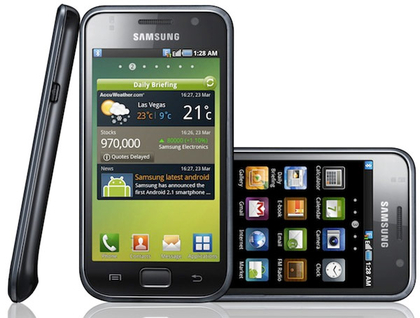


 Mitsubishi OLED globe: ten million pixel resolution clouds
| You are subscribed to email updates from techradar To stop receiving these emails, you may unsubscribe now. | Email delivery powered by Google |
| Google Inc., 20 West Kinzie, Chicago IL USA 60610 | |

No comments:
Post a Comment